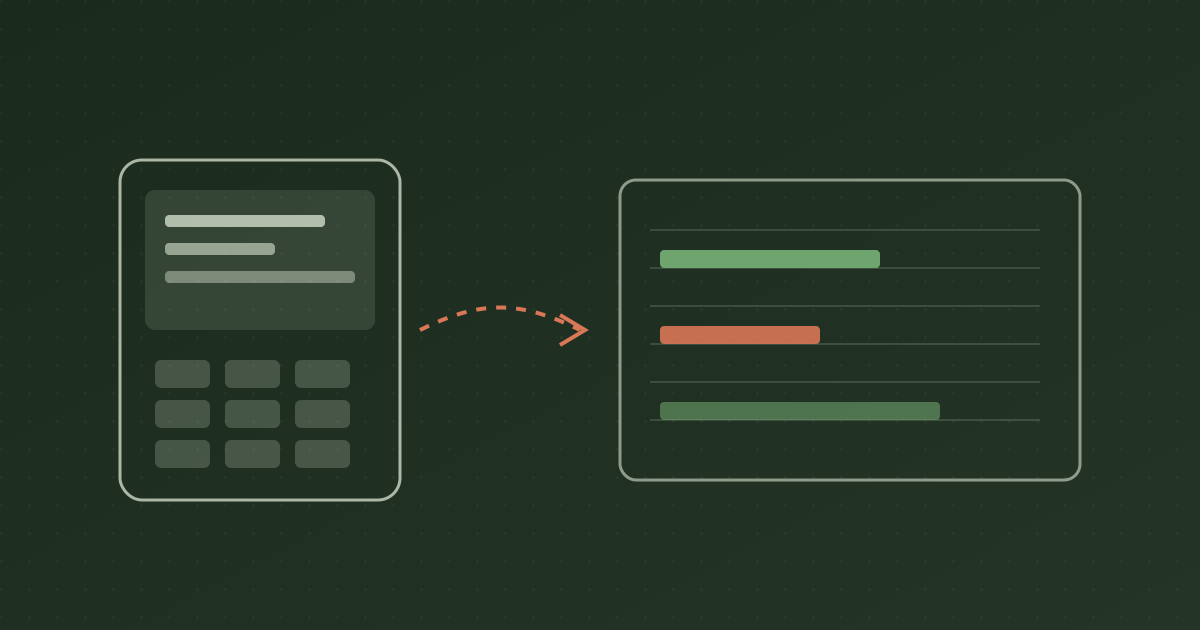
If someone on your team is still typing register totals into QuickBooks every night or week, you are paying for accuracy with overtime and hope. Re-key feels cheap until a tax code slips, a payout category drifts, or the person who "knows how we do it" takes a day off.
Re-key is a process smell, not a personality trait
People do not re-key because they love typing. They re-key because the POS and the books never got a field map, or the map broke and nobody owned the repair. Sales land in the register. Money lands in the bank. The books are supposed to tell one story. When that story is assembled by hand, every busy weekend becomes a reconciliation project.
We see this most in SMB retail and restaurants: Square, Clover, Toast, or a legacy register on one side, QuickBooks on the other, and a spreadsheet in the middle that everyone swears is temporary.
Map before you connect
Before buying another sync tool, write what each tender, tax, tip, gift card, and discount should become in the chart of accounts. Pick item discipline: summary daily sales versus line-level items. Decide how refunds reverse. Decide how online orders, if any, join the same map.
If two managers disagree on those answers, the connector will not invent agreement. It will amplify the disagreement daily.
Failure modes that keep re-key alive
- Tax set correctly in POS and guessed in QuickBooks.
- Payout fees dumped into a miscellaneous expense nobody reviews.
- Tips and wages mixed in ways payroll cannot use.
- Item names that drift weekly so matching fails.
- Exceptions that only live in one person's head.
Any two of those will push a careful bookkeeper back to manual entry, even if a sync job is "running."
A sync people will trust
Healthy POS-to-books flows make exceptions visible. Required fields missing, unknown items, payout totals that do not match deposits: someone gets a clear alert with enough detail to fix the record. Silent success with wrong categories is worse than a loud failure.
Change management matters here. Train the closer on the new review, not only the old typing path. Run one close cycle with old and new side by side. Retire re-key on a named date once totals match within an agreed tolerance. If the spreadsheet stays "just in case" forever, you did not finish.
SMB vs mid-market vs new business
SMB single-location shops can often finish map, connect, and parallel close in a short project. Mid-market multi-location needs shared item and tax governance first, or each store invents its own truth. New businesses should refuse re-key from week one: set the map before the first deposit, while volume is still small enough to correct.
What to do this week
Export last week's POS sales summary and the QuickBooks entries that were meant to represent it. Circle every manual adjustment. Build a one-page tender and tax map. Name an exception owner. Only then evaluate sync options. If you cannot explain the map to a new closer in fifteen minutes, fix the map before you automate it.
What the parallel close should prove
For at least one full close cycle, the synced path and the old re-key path should produce books that match within a tolerance you write down in advance: sales by tender, tax collected, fees, refunds. Differences get a reason code. If differences stay large, you do not retire re-key. You fix the map. Rushing the retirement to hit a project date is how you get a silent miss in sales tax or deposited cash.
Bookkeepers should not be asked to trust a black box. They should be asked to compare two packets side by side with someone who can change the mapping the same day. That staffing is part of the project cost. Skipping it recreates re-key under a new name: manual journal fixes forever.
Item summary versus line detail
Many SMB shops do fine posting daily sales summaries by category instead of every SKU line into QuickBooks. That can be the right call if inventory lives in the POS and the books need financial categories, not merchandising grain. Problems start when leadership asks product-level margin from QuickBooks while the integration only ever sent summaries. Pick the question you need answered in the books, then integrate to that grain. Do not promise product cost accounting from a summary feed.
Restaurants add another wrinkle: comps, voids, and tips. If those are not mapped, labor and revenue conversations turn into archaeology. Put them on the map early, even if the first version is imperfect.
A week-one operating checklist
- Exception queue reviewed daily by a named closer.
- Deposit versus payout reconciliation on a fixed weekday.
- Unknown item list cleared before it becomes a junk category.
- Refund sampling twice a week for the first month.
- Re-key path disabled in procedure, not only discouraged in Slack.
If those habits are not scheduled, the sync will drift and someone will quietly open the old spreadsheet again. Schedule them like shifts, because they are part of closing, not optional hygiene.
What to bring to a vendor or consultant conversation
Your tender and tax map draft. Last week's POS summary and matching QuickBooks entries with manual fixes circled. A decision on summary versus line detail. The name of the closer who will own exceptions. Peak volume expectations. Online channel yes or no. That packet turns a sales demo into a design review. Without it, you will buy features and still re-key.
Want more of this in your inbox? Subscribe to our newsletter.
If closing still depends on typing register totals into QuickBooks, we can map a cleaner path.
Book a Call